LAL / Bacterial Endotoxin Testing
Bacterial endotoxin testing (BET) by Limulus Amebocyte Lysate (LAL) method quantifies endotoxin levels on medical devices that contact blood, CSF, the lymphatic system, or other endotoxin-sensitive routes. Boulder BioLabs executes BET using protocols aligned with USP <85> and the ISO 11737 family, operating under the Boulder BioMed ISO 13485 quality management system.
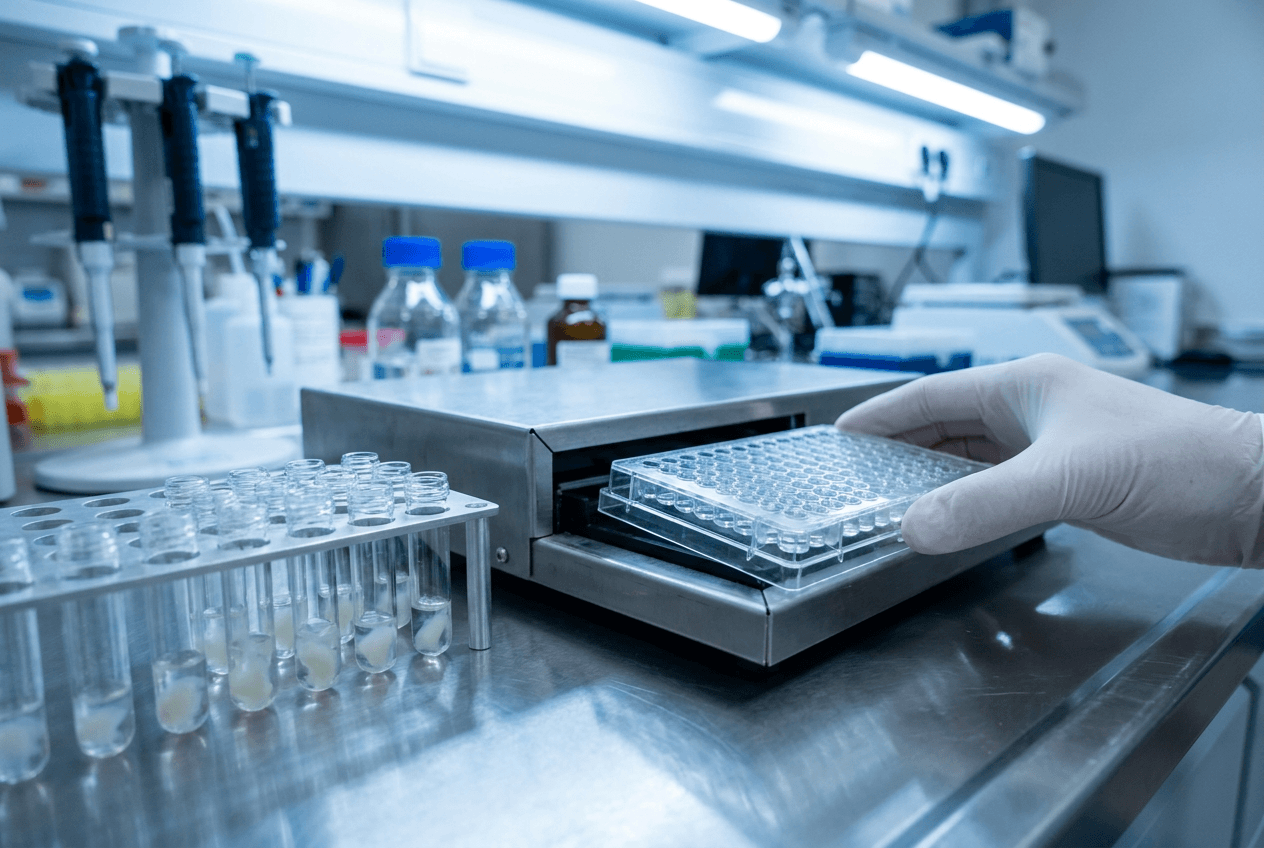
What Is LAL / BET Testing?
Endotoxins are lipopolysaccharide (LPS) fragments from gram-negative bacterial outer membranes. They are pyrogenic and survive most sterilization processes. For devices contacting blood, CSF, lymphatic fluid, or other sensitive routes, sterility isn't enough — endotoxin must be quantified and held below a route-specific threshold (EU/device or EU/cm²).
Boulder BioLabs supports all three major LAL variants: gel-clot, kinetic turbidimetric, and kinetic chromogenic. Each method is qualified against the specific device material with an inhibition/enhancement study (the LAL equivalent of method suitability).
Which Devices Require It?
- Cardiovascular devices — stents, catheters, guidewires, valves.
- CSF-contacting devices — shunts, drains, intrathecal catheters.
- Lymphatic-contacting devices.
- Implantable class II/III devices by contact route and duration.
Why Boulder BioLabs for BET
BET is usually the last test between a sterilized lot and a released product. Co-located with the sterilizer, that last step collapses from days to hours. We also run BET alongside sterility and EO residuals on the same sample sets — one sample drop, three validations.