Microbiology Testing for Orthopedic Implants
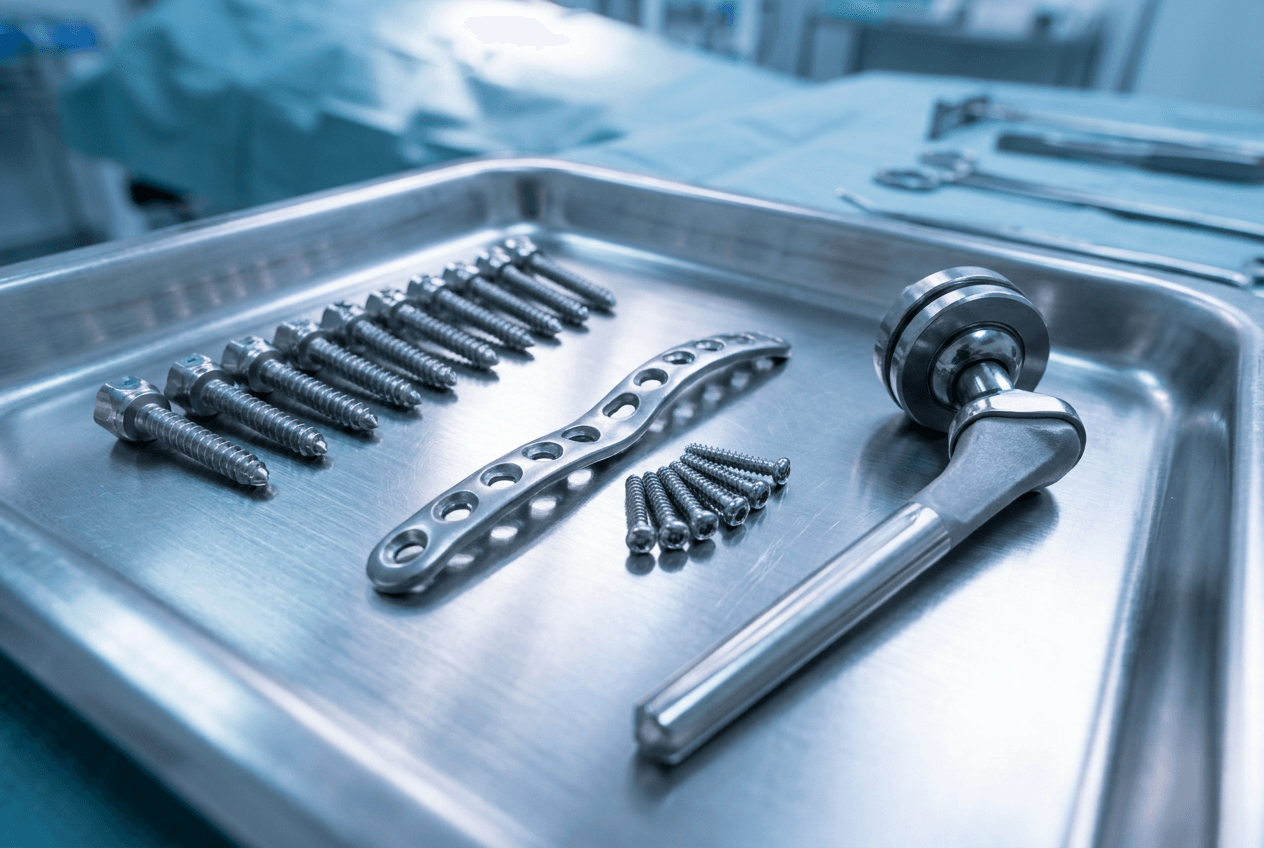
Spine, joint, trauma, and sports medicine implants face full ISO 10993-7 implant-route residual limits and ISO 11135 EO validation requirements. Many orthopedic devices also use chlorine dioxide sterilization for temperature-sensitive materials — one of the few areas where Boulder BioLabs offers a service most competitors can't.
Tests This Industry Requires
- Sterility Testing
- Bioburden Testing
- EO Residuals Testing
- CD Sterilization Residuals
- Method Suitability (B/F)
What Makes Orthopedic Implants Testing Different
Many orthopedic devices — particularly those with bioabsorbable polymers, temperature-sensitive coatings, or heat-sensitive electronics in smart implants — can't tolerate EO cycles. Chlorine dioxide is the alternative, but it requires CD residuals testing that almost no contract lab offers.
Why CD Sterilization Matters for Orthopedics
Many orthopedic devices — particularly those with bioabsorbable polymers, temperature-sensitive coatings, or heat-sensitive electronics in smart implants — can't tolerate EO cycles. Chlorine dioxide is the alternative, but it requires CD residuals testing that almost no contract lab offers. Boulder BioLabs offers it precisely because we are co-located with Boulder Sterilization's CD cycle — the only U.S. contract CD sterilization under ISO 13485.